Soccer Drill
Flying Numbers Game
Description
A fast-paced exercise designed to improve reactions, transition play, attacking decision-making, defending under pressure, and small-sided game intensity. This drill helps players quickly adapt to changing game situations such as 1v1, 2v2, 3v1.
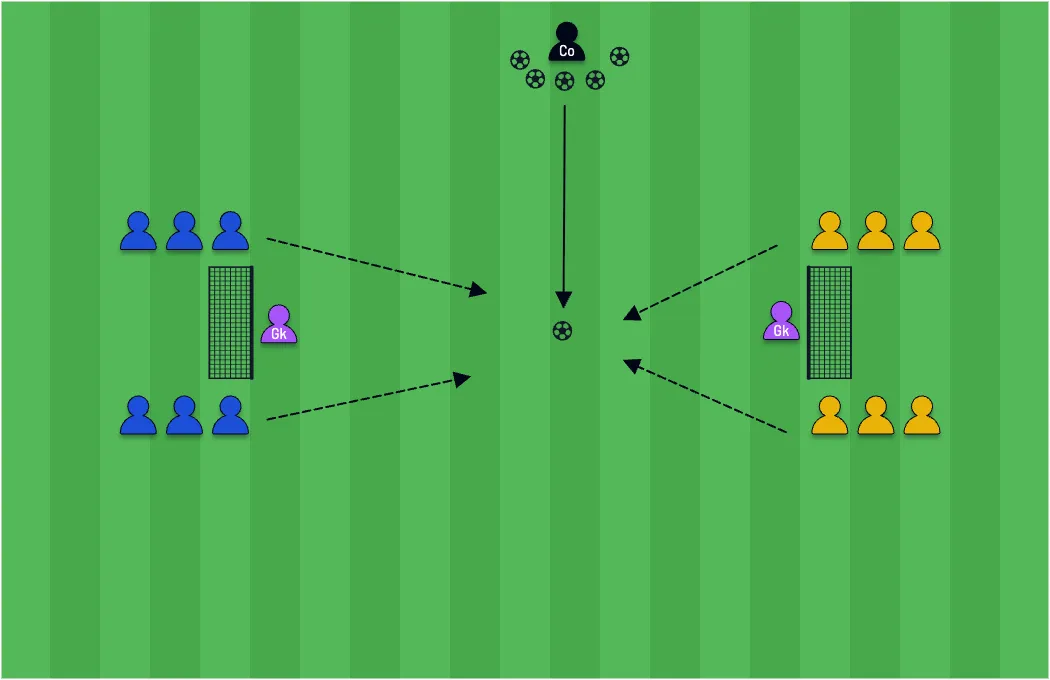
Set up a rectangular playing area with a small goal or pug goal on each endline. Divide the players into two equal teams and position each team in a line beside opposite corner posts, one team on the left side and one team on the right side.
The coach starts each round by playing a ball into the middle of the pitch and calling out a number combination, such as “2v2,” “3v1,” or “1v2.” The relevant number of players from each team immediately sprint onto the field to compete for the ball.
The team that wins possession becomes the attacking team and tries to score in the opponent’s goal. The other team must quickly transition into defending and attempt to win the ball back. Once a goal is scored, the ball goes out of bounds, or the coach ends the round, the players leave the field and the next group prepares for a new number call.
This competitive small-sided soccer drill is excellent for developing quick reactions, transition moments, communication, attacking creativity, and defensive organization.
Coaching Points
- Encourage players to stay alert in the line and react immediately when their number is called. Players should be ready to sprint, scan the field, and compete from the first second.
- As soon as possession is won or lost, players must react. The attacking team should look to score quickly, while the defending team should recover, press, and protect the goal.
- Encourage players to attack with purpose and finish quickly when a good chance appears. The drill should feel game-realistic, with fast decisions and high intensity.
- Defenders should communicate, delay the attack, stay compact, and force play away from goal. In underload situations, the defender’s priority may be to slow the attack down and wait for a mistake.