U6
Keep it very simple and let the ball do most of the teaching.
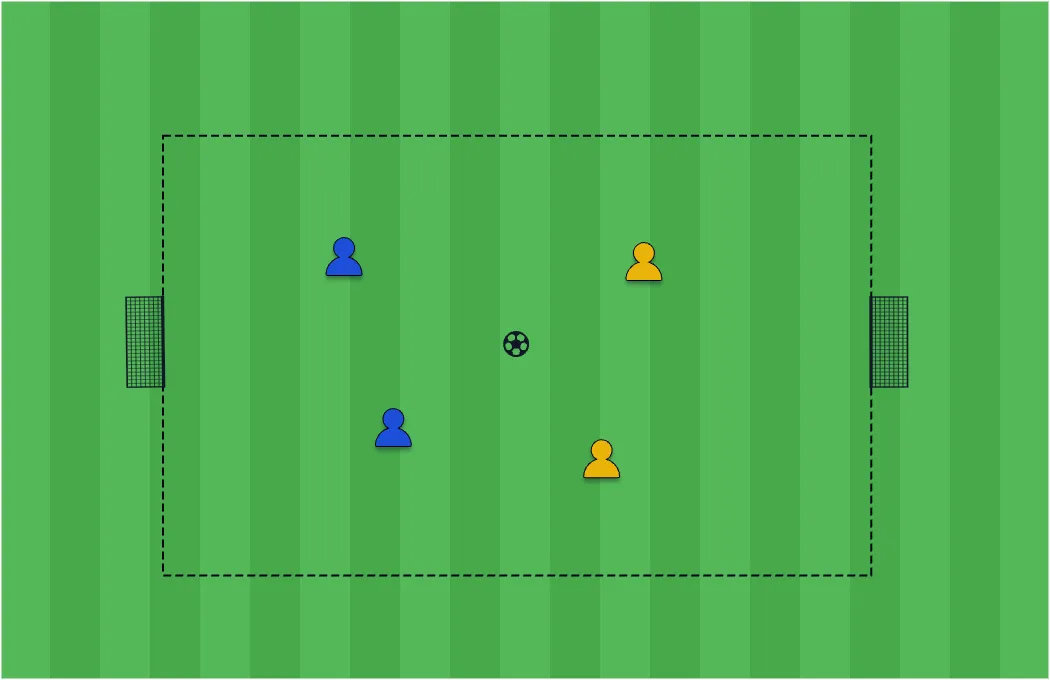
Use lots of 1v1, 2v2 and occasional 3v3 games with big goals and plenty of space. Avoid complicated rules or fixed positions. At this age, players should be encouraged to dribble, chase the ball, score goals and enjoy competing.
Short rounds work well. Restart quickly and accept that the game may look chaotic — that's part of learning.
Good focus: dribbling, turning, scoring, winning the ball back and having fun.
U8
Small-sided games should still give players lots of chances to attack, defend and score.
2v2 and 3v3 are excellent formats, with 4v4 useful when you want players to start recognising teammates and space. Encourage players to spread out, but don't spend too much time trying to make them hold positions.
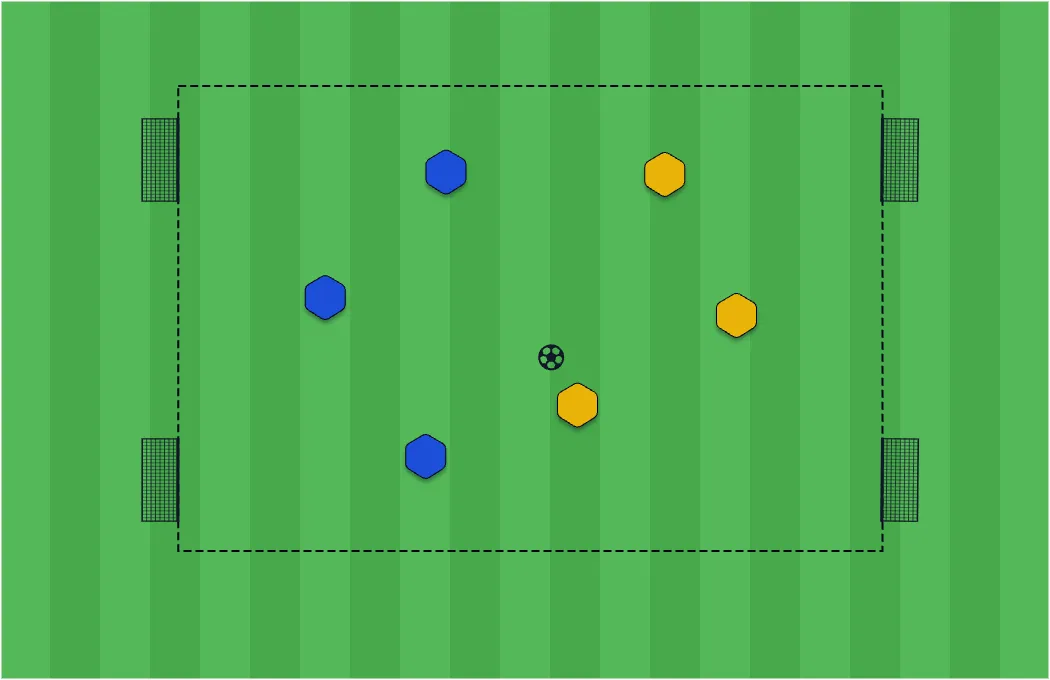
Introduce simple challenges such as scoring in either of two goals or earning an extra point for a particular action.
Good focus: dribbling, passing choices, finding space, 1v1 defending and reacting when possession changes.
U10
Players are ready for more tactical problems, but the game should still be simple enough that they can discover solutions themselves.
Use plenty of 3v3 and 4v4, with neutral players or overloads such as 3v2 when you want to highlight a particular idea. Start asking players to think about width, support, movement away from the ball and how quickly they react when possession changes.
Conditions can help, but use them sparingly. Whenever possible, design the game so the behaviour you want appears naturally.
Good focus: support, combination play, width, creating overloads, pressing and transition.
U12
Games can become more directional and closer to situations players experience in matches.
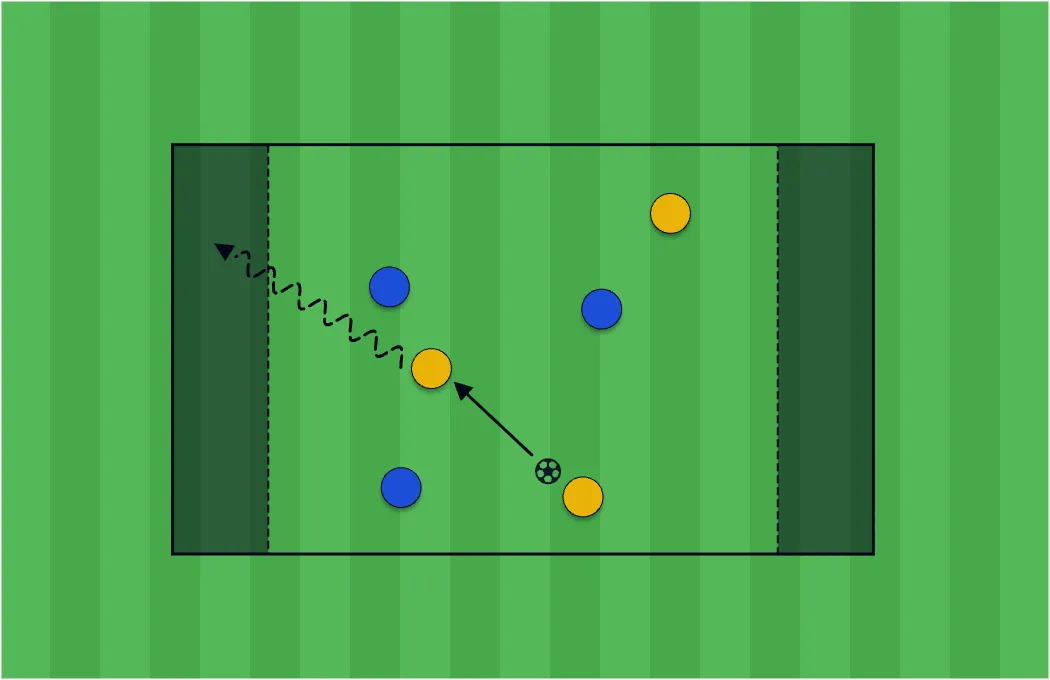
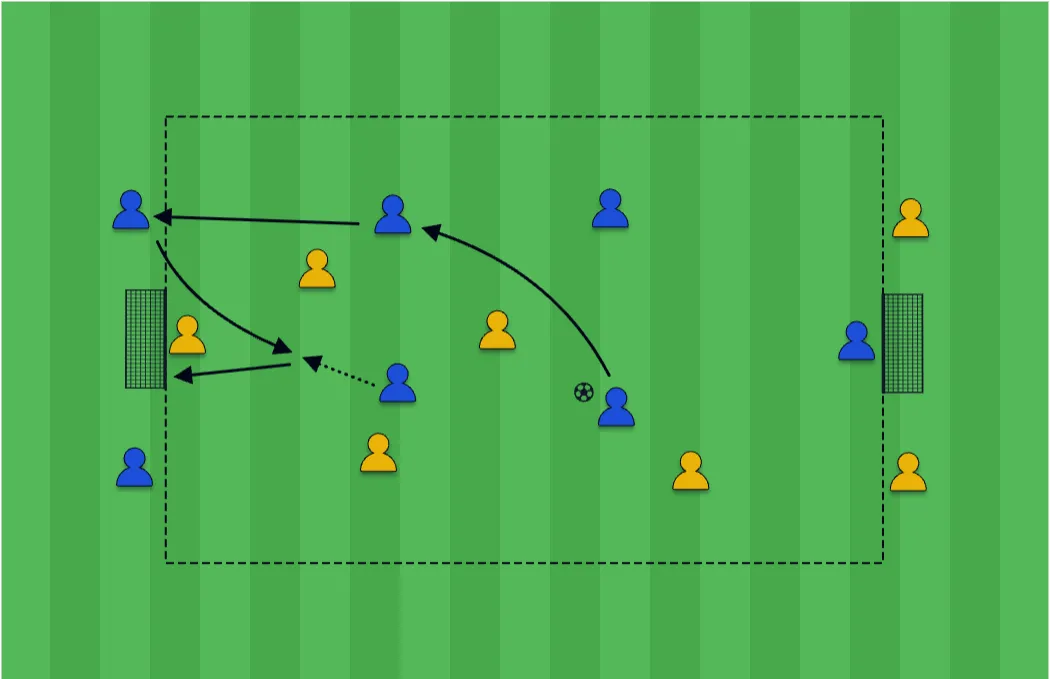
3v3, 4v4 and 5v5 all work well. Use different field shapes, end zones, target players or multiple goals to bring out specific tactical behaviours.
Players can also take more responsibility for solving problems. Give them time to play, ask what they are noticing and let them suggest solutions before you step in.
Good focus: decision-making, creating and using space, combination play, compact defending, pressing, transition and game awareness.