Soccer Collection

Soccer Drills to Improve Possession for U10, U12 & U14

About This Collection

Possession drills help players get more comfortable keeping the ball under pressure. They encourage good first touches, quick support, smart movement and better decisions about when to pass, dribble or protect the ball.

The goal isn't simply to make lots of passes. Good possession is about helping players recognise space, create better passing options and keep the ball with a purpose.

When to Use This Collection

Use these drills when you want your team to become calmer and more confident on the ball, especially when opponents are applying pressure.

They are particularly useful when you want to:

  • Improve first touch and passing under pressure.
  • Teach players to stop bunching.
  • Help players create better angles and passing options.
  • Encourage movement after passing.
  • Teach players to scan before receiving the ball.
  • Improve decision-making in tight spaces.
  • Help players recognise when to play quickly and when to keep the ball.
  • Build confidence when playing out from the back.
  • Improve reactions when possession is won or lost.

Possession drills can also be a good bridge between technical work and a larger game, giving players lots of repetitions while still asking them to read and react to what is happening around them.

How to Coach

Move before you need the ball.
Players should constantly adjust their position to give the player on the ball a clear option. Small movements can make a big difference.

Create good angles.
Try to avoid players standing in straight lines behind defenders. Encourage them to move into positions where the ball can travel around or through pressure.

Scan before receiving.
Players should know as much as possible about their next action before the ball arrives. Encourage them to check their shoulders and look for teammates, opponents and space.

Use the first touch to solve a problem.
A good first touch should make the next action easier. That might mean taking the ball away from pressure, moving into space or setting up the next pass.

Play at the right speed.
Possession doesn't always mean playing one-touch. Sometimes the right decision is to move the ball quickly; other times it is better to take an extra touch and allow teammates to move.

Support the player on the ball.
The player in possession should ideally have more than one option. Encourage nearby players to provide short support while others create depth or width.

React when possession changes.
The moment the ball is lost or won is important. Encourage an immediate reaction: can you win it back quickly, or can you move into space and secure the first pass?

Let the drill breathe.
Avoid stopping every mistake. Players need repeated chances to recognise patterns themselves. Coach during natural breaks or when one clear point will help the whole group.

Age-Specific Adaptations

U10

Keep possession activities simple and make sure every player gets plenty of touches. Give players enough space to control the ball and look up before pressure arrives.

At this age, focus less on counting long passing sequences and more on helping players understand a few basic ideas: move after passing, find open space and give the player on the ball an easy option.

Avoid demanding one-touch play too early. Let players take the touches they need while encouraging them to become quicker as their confidence improves.

Good focus: passing accuracy, supporting angles, scanning and moving after the pass.

U12

Players can begin to deal with tighter spaces, more pressure and more complex decisions.

Use 4v2, 5v2 and 4v4 possession games, as well as directional games where teams keep the ball before trying to play into a target player or end zone.

Encourage players to recognise where the pressure is coming from and move the ball toward areas where they have an advantage. Introduce ideas such as switching play, third-player movement and creating triangles around the ball.

Players should also start thinking more about what happens immediately after losing possession.

Good focus: first toch, scanning, receiving under pressure, speed of play, creating triangles, switching play and transitions.

U14

Possession work can become more tactical and closely connected to how the team wants to play in matches.

Challenge players to recognise different types of pressure. Can they play through it, around it or away from it? Encourage them to communicate, adjust their position early and think one or two actions ahead.

Possession should increasingly have a purpose. Rather than rewarding passes for their own sake, connect possession to progressing the ball, creating an overload or finding a player in a dangerous position.

Good focus: playing through pressure, switching the point of attack, third-player combinations, positioning, tempo and attacking transitions.
Drills in this Collection

Basic Possession With Bouncers

Basic Possession With Bouncers

Easy · U10–U14

Passing

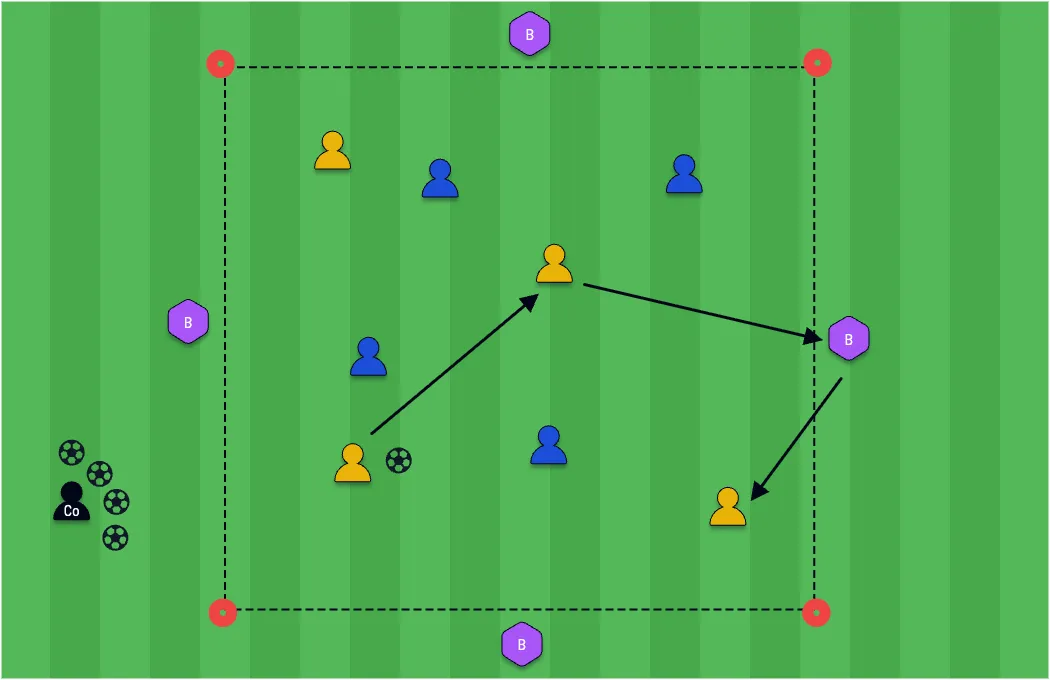
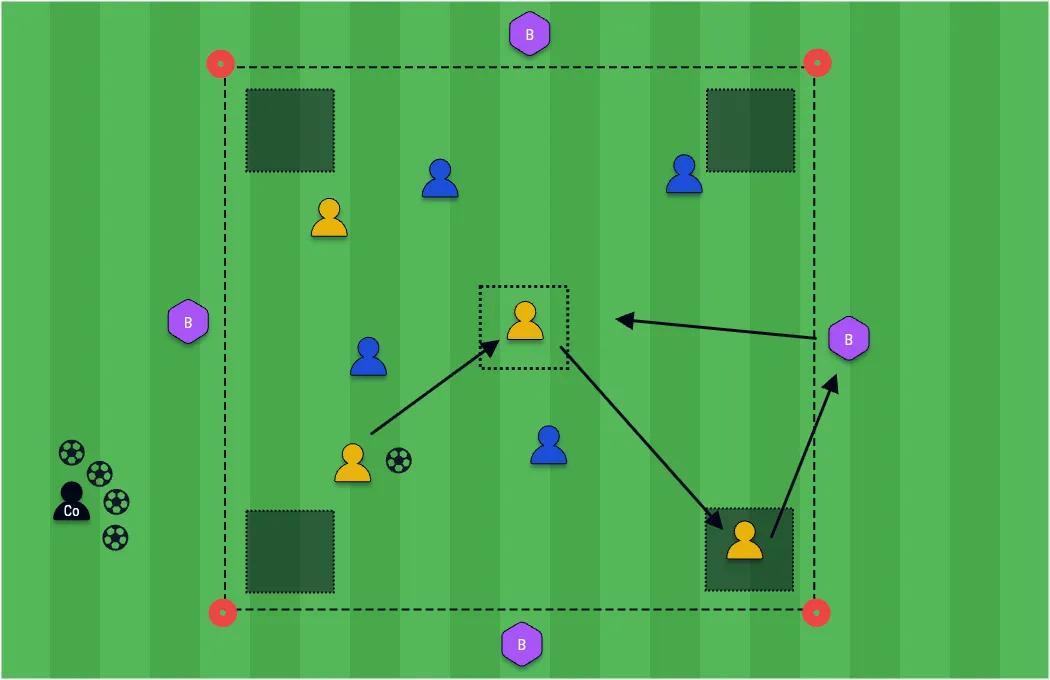
This possession drill with neutral bouncers helps players improve scanning, passing angles, width, depth and decision-making under pressure. By using outside support players, the game encourages teams to recognize space, keep possession and avoid crowding around the ball.

Possession With Bouncers and Central Link-Up Zone

Possession With Bouncers and Central Link-Up Zone

Hard · U12–U16

Passing

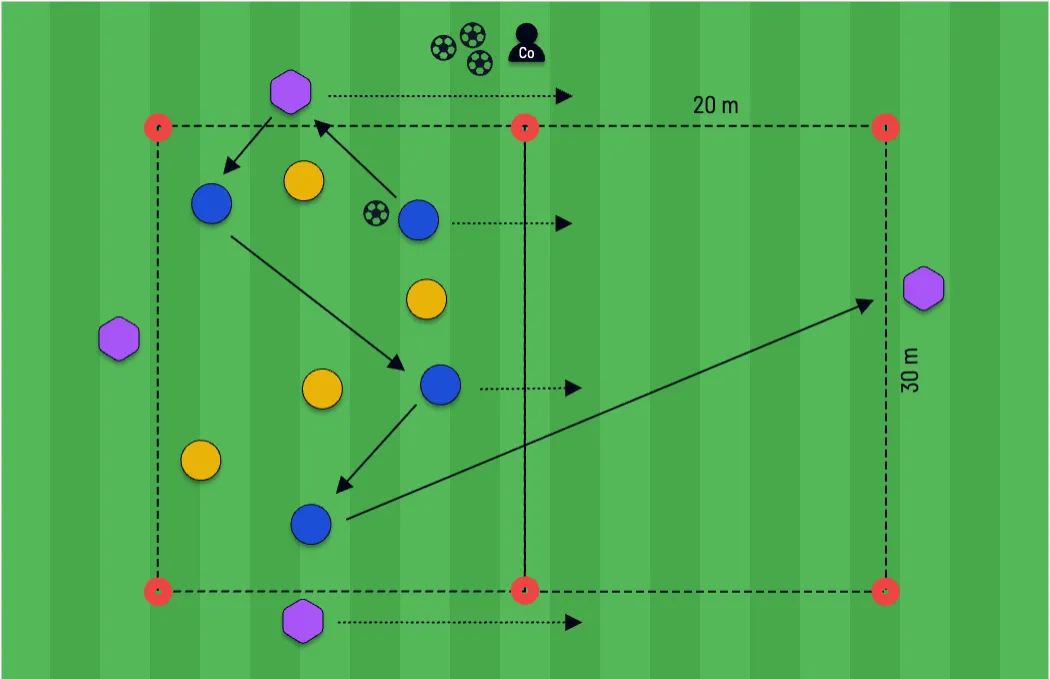
This possession drill develops link-up play, breaking lines and creating passing options in multiple directions. The central link-up zone encourages players to play through the middle before finding space in wide or advanced scoring zones.

Possession With Bouncers and Scoring Zones

Possession With Bouncers and Scoring Zones

Medium · U10–U14

Passing

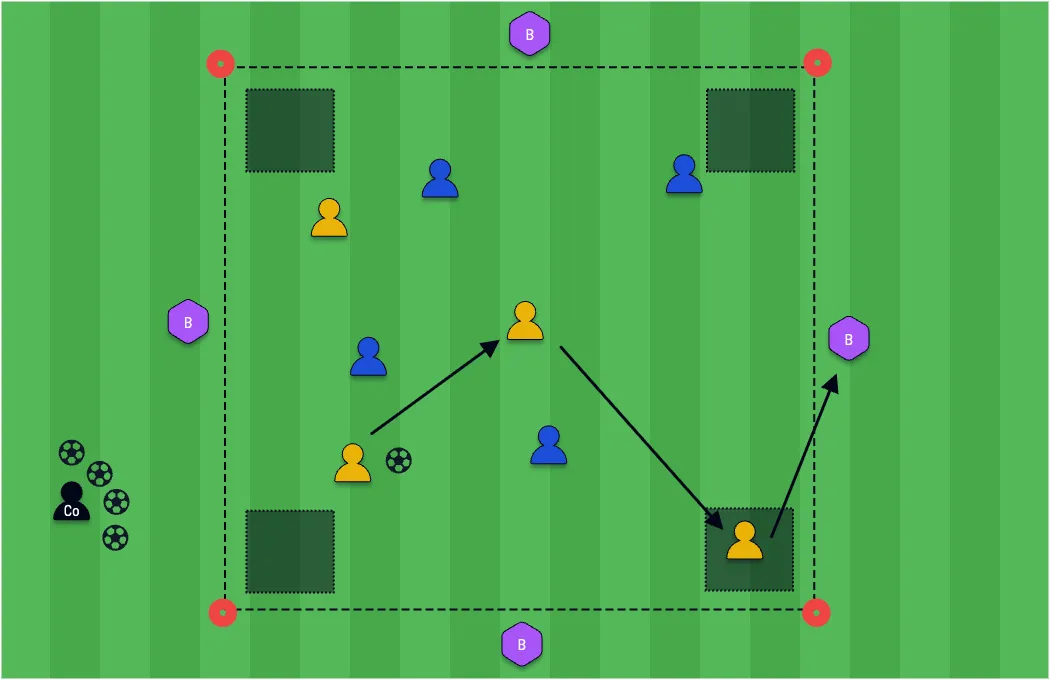
This possession drill with bouncers and scoring zones helps players improve spacing, scanning, passing angles and decision-making. The four scoring zones encourage players to spread out, use width and depth, and recognize when to play into space.

Two-Zone Build-Up Possession Game

Two-Zone Build-Up Possession Game

Medium · U10–U14

Passing

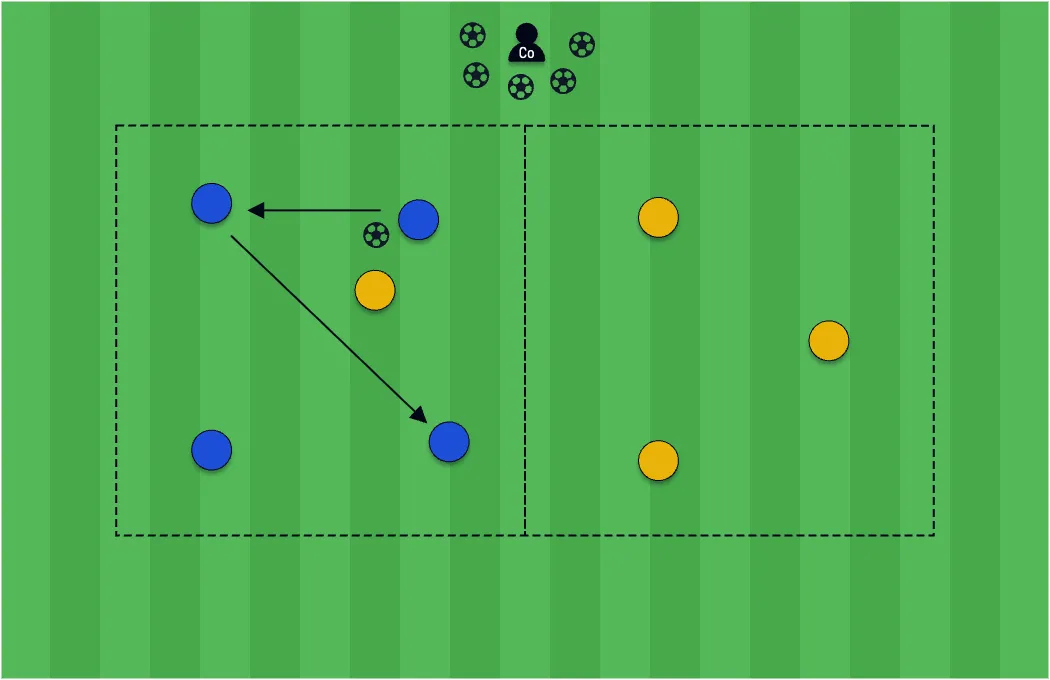
This build-up play drill helps players improve possession, width, depth, passing angles, and switching play under pressure. It is a great soccer possession drill for teaching players how to build play patiently, use support players, create passing options, and recognize when to switch the point of attack.

Two-Team Rondo

Two-Team Rondo

Medium · U10–U14

Passing

This is a possession and movement rondo designed to help players spread out, support the ball carrier, pass under pressure, and avoid bunching around the ball.

FAQ

Frequently Asked Questions

Should I limit players to one or two touches?
Sometimes, but don't make touch limits the default. Touch restrictions can encourage quicker decisions and faster ball movement, but they can also make a drill unrealistic if players are not yet comfortable receiving under pressure. Start without a restriction. If players are taking unnecessary touches, try two-touch for a short period or challenge them to play more quickly when the opportunity is there.
How can I make a possession drill easier or harder?
The easiest adjustment is usually the size of the playing area. Make the space bigger if the team in possession needs more time and success. Make it smaller if you want quicker decisions and greater pressure. You can also change the number of defenders, add neutral players or change the scoring system. Adjust one thing at a time so you can see how it affects the game.
How do I stop possession drills becoming passing for the sake of passing?
Give possession a purpose. Instead of simply rewarding ten consecutive passes, ask players to keep the ball until they can find a target player, switch the ball from one side to another, play through a central zone or attack an end zone. That keeps the benefits of possession while reminding players that the point of keeping the ball is usually to create a better opportunity.

Sport

Soccer

Drills

5

Want to use these drills in your training sessions?

Sign Up

Create drills, build sessions, share with your team

Related Sessions

Related Collections